Founded in California in 2019, Transition U began as a veteran-led nonprofit with a commitment to service through life’s transitions. Its early work included direct veteran and community services; its next chapter expands that service ethic into research, evidence and institutional capacity.
PEOPLE BEHIND THE WORK
Research and service, built together.
Transition U’s founders bring different forms of experience to the institution: research and institutional development on one side; direct program delivery and community service on the other.
01 / FOUNDER
Andrew L. Johnson, PhD
Research · Evidence · Institutional development
A U.S. Army veteran who leads Transition U’s research, evidence and institutional-development direction. His work focuses on connecting public-interest research, scientific collaboration and stronger institutions to measurable public benefit.
02 / CO-FOUNDER
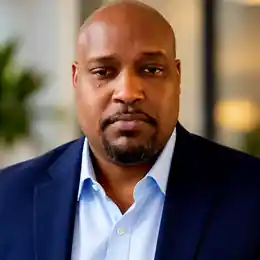
Eric Gardner II
Programs · Service delivery · Community execution
A key builder of Transition U’s early veteran-service work in Stockton, including housing, employment support, street outreach and services for veterans experiencing homelessness. His work also includes successful government-contracted services and experience supporting service-disabled veteran-owned businesses.
Transition U’s historical record includes veteran services, community outreach and other public-benefit activity in the United States and Ghana. Historical programs are preserved as evidence of prior work; they are not automatically current offerings.
The next chapter
Transition U’s next chapter is a working direction: a nonprofit that connects research, evaluation, education and institutional capacity to public benefit.
We want to help mission-driven organizations understand important problems, measure what works and build the human and technical capacity to act.
INSTITUTIONAL MEMORY / 2019 → NOW
The record moves forward without erasing what came before.
DOCUMENTED2019
Transition U founded
Founded in California as a veteran-led nonprofit with a service mission.
New programs and institutional services will grow from actual capacity, evidence and human decisions. Research interests do not become research results. A plan does not become an outcome.